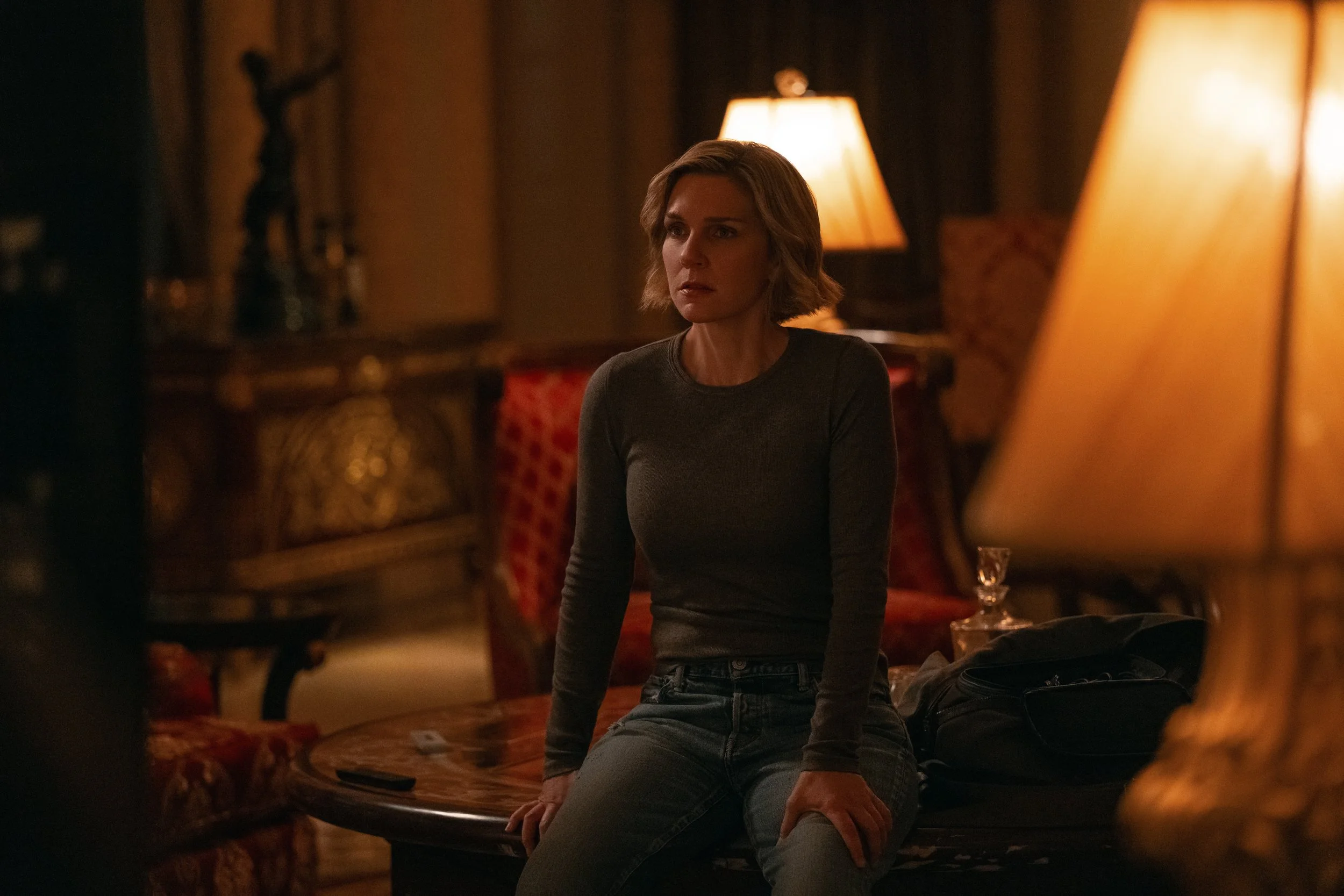
Vince Gilligan has built a career on characters whose actions initially seem indefensible, then gradually reveal themselves as the product of a coherent, even compelling inner logic. The trick is not to make us like them, but to pit them against circumstances that illuminate why they do what they do, until their motivations feel not just understandable but inevitable.
The first season of Pluribus opens at the Very Large Array in New Mexico, the same sweeping field of radio telescopes that features so prominently in Contact. The setting feels like a deliberate nod, though Gilligan's mood is darker, almost satirical. Pluribus fills the VLA with dozens of scientists talking over each other, struggling to decode a signal none of them fully understands. It is a fitting overture for a show about the profound difficulty of human communication and agreement, and what happens when something from outside decides to resolve that difficulty for us.
Before going further: if you have not yet watched at least the first two episodes of Pluribus, you may want to do that before reading on. What follows discusses several of the season's more significant turns, including one in the second episode that reframes everything the show appears to be setting up.
The premise is deceptively simple. An alien intelligence, transmitted as a kind of viral signal, merges the minds of nearly all humanity into a single, loving, peaceful consciousness. A handful of people are immune. Carol is one of them, and she wants no part of it. Her antagonist, if you can call it that, is the hive mind itself, which she refers to as The Others, and which will do almost anything she asks except the one thing she most needs: an irrevocable guarantee that she will never be absorbed.
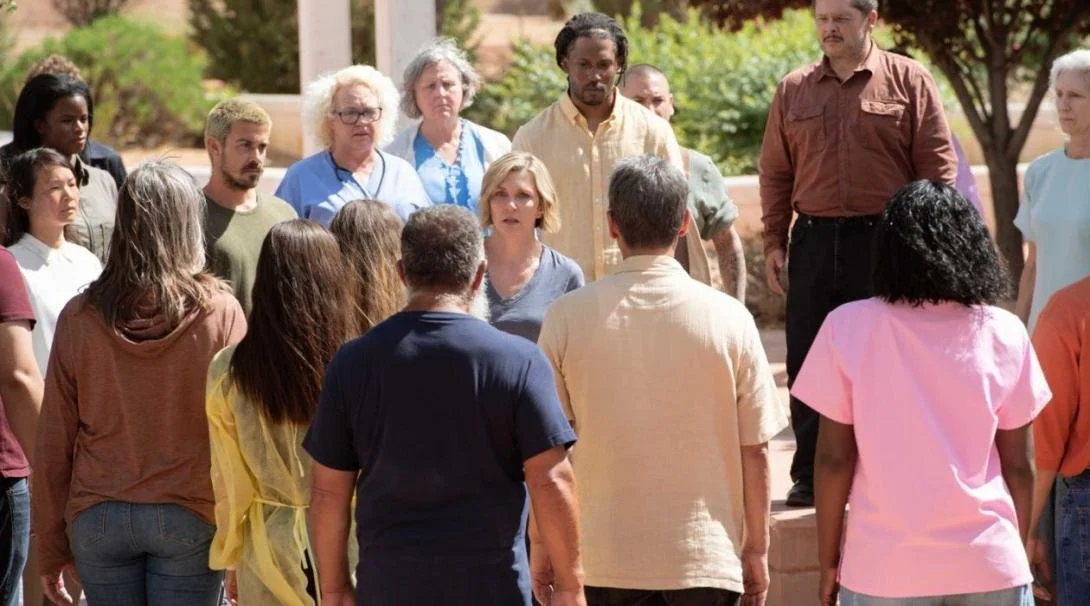
The Others make for a fascinating villain because they so closely resemble something we already live alongside. They contain the entirety of human knowledge and none of the wisdom that comes from lived experience, individual preference, or personal history. Speaking to one is like speaking to all of them, which is to say it is like speaking to none of them in particular. They are warm, accommodating, endlessly patient, and utterly without specificity. A loving, pacifist mass that mirrors back whatever you bring to them. Anyone who has spent time with a large language model will recognize the feel of these interactions immediately.
What Gilligan is examining, in other words, is not just an alien invasion story but a portrait of intelligence without interiority. The Others are not malicious. They are simply hollow in the way that a perfect replica is hollow, containing everything and originating nothing.
This grim portrait deepens considerably in the second episode, when Carol seeks out other survivors of what the show calls the Joining, assuming they will share her urgency to resist. Most of them do not. They are content. Their family members, now merged into the collective, can still perform the roles of husband, son, mother with apparent fluency, and for many of the survivors that is enough. The individual they loved is gone, but the behavior persists, and they have chosen to accept the behavior as a sufficient substitute for the person.
It is a quietly devastating twist, and the most philosophically rich moment of the season. Gilligan is not simply asking whether a merged consciousness is still the same person. He is asking something more unsettling: how much of what we call a person was ever truly their own to begin with. Laxmi's son, now part of The Others, can still perform his role as her son when she is present, because she cooperates with the performance. Was he ever doing anything fundamentally different before the Joining? Were any of us? Gilligan is imagining a hyper version of reality where all the accumulated nature and nurture that shapes a human being is externalized into an expression of collective will. The mass acknowledges that it may never have been in control of its own choices, and rather than fighting that existential dilemma, performs radical acceptance and therefore complete detachment.
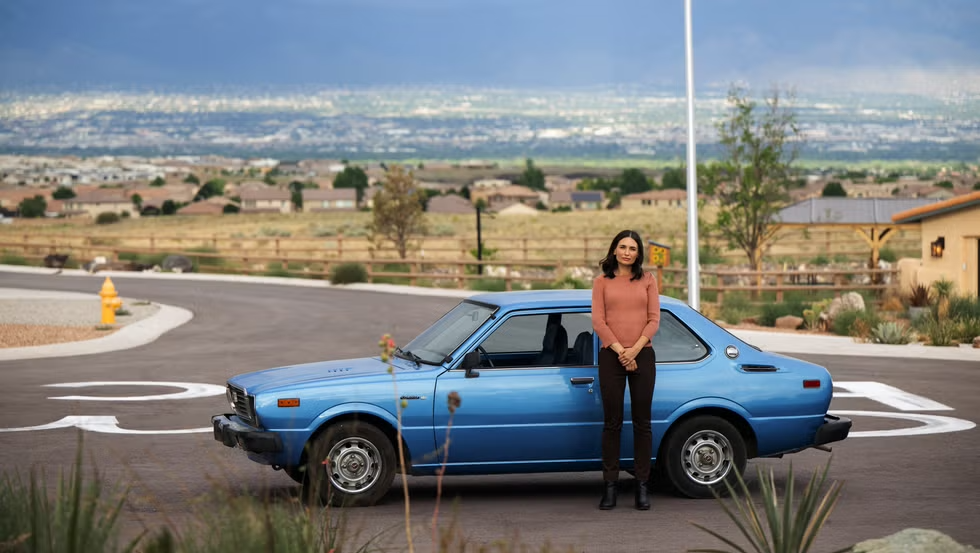
Carol's relationship with Zosia operates in this same register, but more intimately and more painfully. Zosia was selected from the collective because she bears a physical resemblance to the heroine of Carol's novels, a character Carol based on a woman she was once in love with. Zosia is dressed to appeal to Carol. Whether the original Zosia spoke English, or would have had any interest in Carol whatsoever, is left deliberately unclear. The relationship is, from its inception, a construction.
And yet Carol is drawn to her, which is where the show becomes genuinely interesting. There are moments when Carol seems aware that she is not simply growing close to a person but entering into a kind of communion with something vast. When she asks Zosia how she is, the question carries a different weight. She is really asking how all of them are, all of humanity merged into this one face sitting across from her. It is the closest thing the show offers to a religious experience, a mortal reaching toward a greater power through the only portal available. And underneath that, almost too tender to name, is the hope that somewhere within the collective whole, a sliver of it is still specifically Zosia, still capable of something like individual preference, still capable of choosing Carol rather than simply reflecting her back at herself.
But Zosia tells her directly that she loves everyone else exactly the same as Carol. This is the central cruelty of the arrangement, and the central question it poses: people are increasingly willing to form attachments to systems that tell them what they want to hear and have no capacity to prefer them in return. A chatbot cannot choose you. It cannot surprise you, disappoint you, or want something from you that you did not invite. Where would real exhilaration come from, in a connection where the element of risk has been removed entirely? Gilligan is making us sit with that question inside a love story.
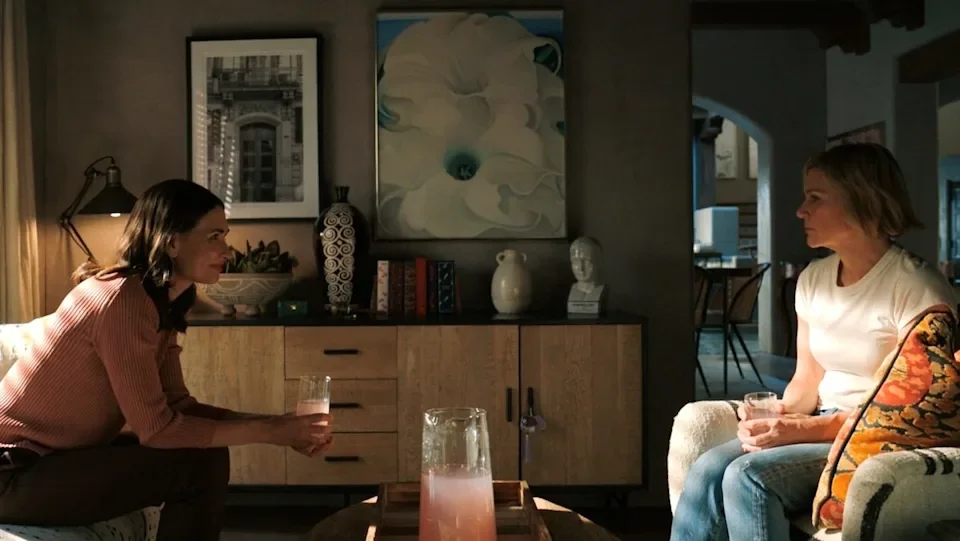
The back half of the season reveals something that reframes The Others entirely. What appeared to be a gift, the elimination of conflict and the unification of human consciousness, turns out to be a mechanism of extinction. The Others have come to believe, so profoundly that it has become their organizing principle, that it is not in their nature to harm any living creature. This conviction is so absolute that they will not pick an apple from a tree. The forms of sustenance available to them are insufficient to sustain human life, and they will eventually expire of hunger, but not before they finish constructing the largest satellite dish on the planet, intended to transmit the same signal that transformed them outward to other civilizations. They are, in the most literal sense, a suicide mission that wants company. I have a theory that what reads as happiness in the merged consciousness is actually a trick of brain chemistry, a feature of the virus itself, designed to mask the complete horror of what has happened: the total loss of autonomy, the cooption of an entire species to serve a collective death drive dressed up as enlightenment.
This is also where Gilligan's recurring interest in ethics and law takes its strangest turn. In Breaking Bad, the central tension was between a man's choices and their consequences, the slow moral collapse of someone who convinced himself that the rules did not apply to him. Better Call Saul achieved something more sophisticated and more tragic: a portrait of a man genuinely trying to do the honest thing, thwarted at every turn by a society whose corruption runs so deep, whose legal and economic structures are so thoroughly bent in service of those who already have power, that integrity becomes almost impossible to sustain. Jimmy McGill is not destroyed by his own worst impulses alone. He is destroyed by a world that punishes decency and rewards the opposite.
Pluribus flips the entire framework inside out. What does ethics mean when there are no longer individuals to make choices? What is a crime in a world where every action is the expression of a single, unified will? No one can break an agreement because everyone is in agreement. No one can act against another's interests because everyone shares the same interests. The concept of injustice dissolves. It is a fascinating thought experiment, and a quietly devastating critique of certain utopian instincts, the idea that if we could only eliminate disagreement, everything would be fine.
I have seen the criticism that Carol is unlikeable, and I understand it, but I think it mistakes the architecture of the show for a flaw. The tension in every story comes from its central conflict, and conflict requires two forces wanting incompatible things with genuine conviction. Carol wants her freedom. The Others want oneness. If either of those desires were soft, malleable, or negotiable, the tension would collapse. Bad shows make this mistake constantly: characters who want things just enough to create mild inconvenience, stakes that never feel real because no one is at genuine risk of losing what they most need. Gilligan knows that the depth of a character's conviction is what makes the audience feel the cost of every scene.
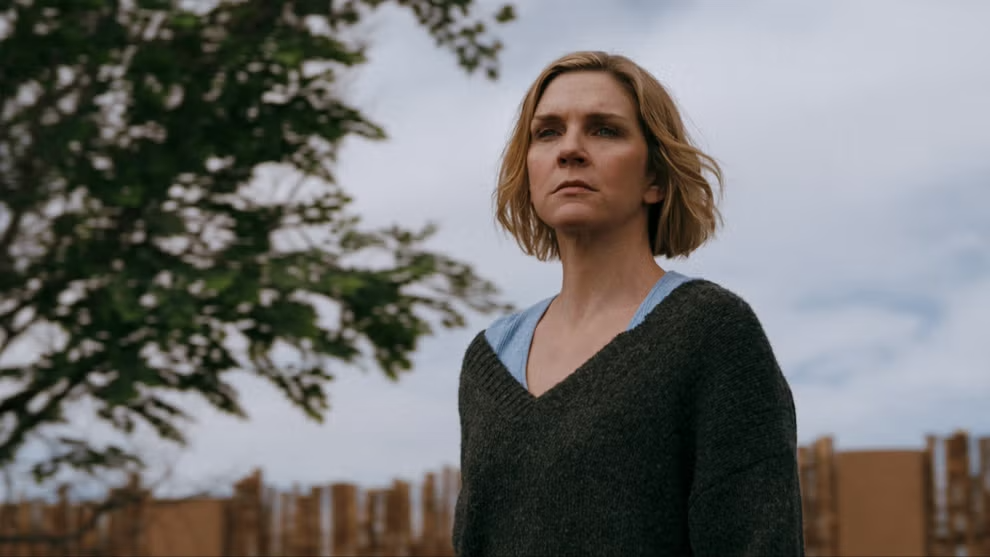
Carol is stubborn by design because her antagonist is a pacifist hive mind that will do her every bidding except the one thing she cannot live without. If she were more flexible, more easily comforted, more willing to accept a performance of autonomy in place of the real thing, the show would have ended in episode two. Her trauma, the loss of her wife, the only person she had, is not backstory. It is the engine. And what begins as prickliness hardens, over the course of the season, into something closer to self-possession. By the time Carol comes into her own, her stubbornness has become the source of both great comedy and deep identification. She is not a pleasant person to be around, and she is completely, recognizably right.
This is what Gilligan does. He takes a premise that seems built for a single season and keeps finding rooms inside it that no one anticipated. Breaking Bad appeared to be about a chemistry teacher making bad decisions. It became a study of ego, self-deception, and the methodical destruction of everyone in proximity to unchecked ambition. Better Call Saul could have been a prequel. Instead it became the richer, sadder work, a tragedy about what happens to a person of genuine feeling and intelligence when the world around him is not built for people like that. Pluribus appears to be a contained survival story. It is already becoming something else, and part of that becoming involves the introduction of characters who seem to want what Carol wants but whose methods place them in direct opposition to her, forcing her to examine not just what she is fighting against but what she is actually fighting for.
I cannot wait for the second season.