The Smoking Gun
The question seemed small at first. Why was a little indie film from five years ago suddenly number one on HBO Max?
The Fallout, starring Jenna Ortega as a survivor of a high school shooting, premiered at SXSW in 2021. On the week of its release on HBO in 2022, it was the most-watched streaming original film in the United States. But in the spring of 2026, it was inexplicably back at the top of the list again, as if riding an undetectable cultural current.
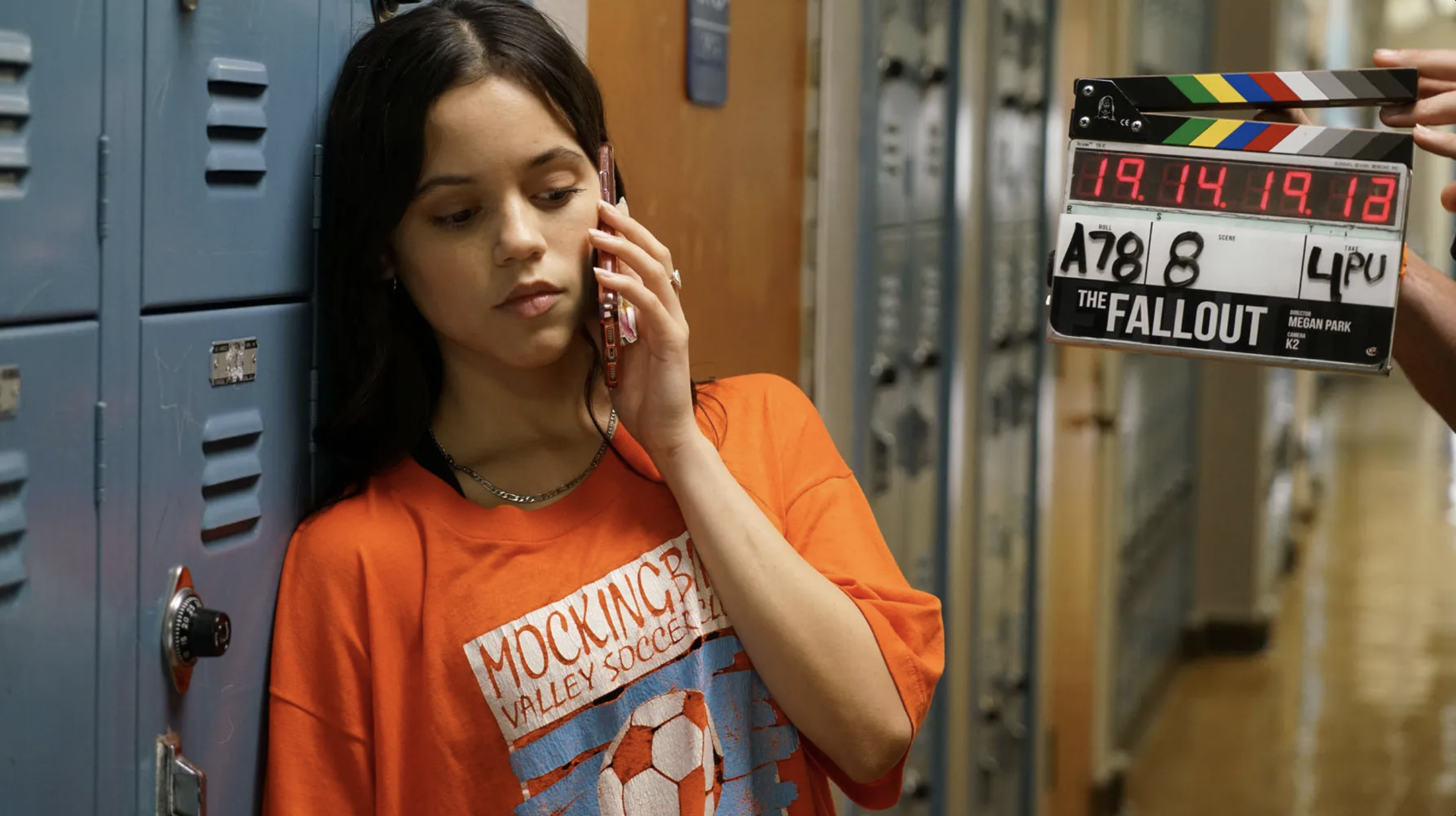
Behind the scenes of The Fallout (2021)
So why this film? Its relevance in young people’s lives is painfully evident. A Blue Shield of California/Harris Poll survey found that nearly nine out of ten members of Generation Z (now aged 14 to 29) struggle with mental health on a regular basis. Gun violence is their top stated concern: 84% report negative mental health impacts from it, more than from climate change, racism, or economic anxiety. A Southern Poverty Law Center report concluded that the average young person in America knows at least one person harmed or killed by gun violence. But this data has been documented for a number of years. So why now?
[The following paragraphs contain spoilers for the 2026 films The Drama and Hokum.]
My theory about The Fallout’s resurgence involves another film. When A24 released The Drama in early April, Kristoffer Borgli’s dark romantic comedy starring Zendaya and Robert Pattinson, it was marketed as a wedding movie where something goes seriously wrong. I was intrigued enough to go see it, realizing fairly quickly that the primary audience for this film was a decade or two younger than me. And what the trailers didn’t disclose is that about twenty-five minutes in, Zendaya’s character confesses to her fiancé that she once planned a mass shooting. She brought a gun to school, but didn’t go through with it. Like many, I was surprised and conflicted about the treatment of this subject matter.
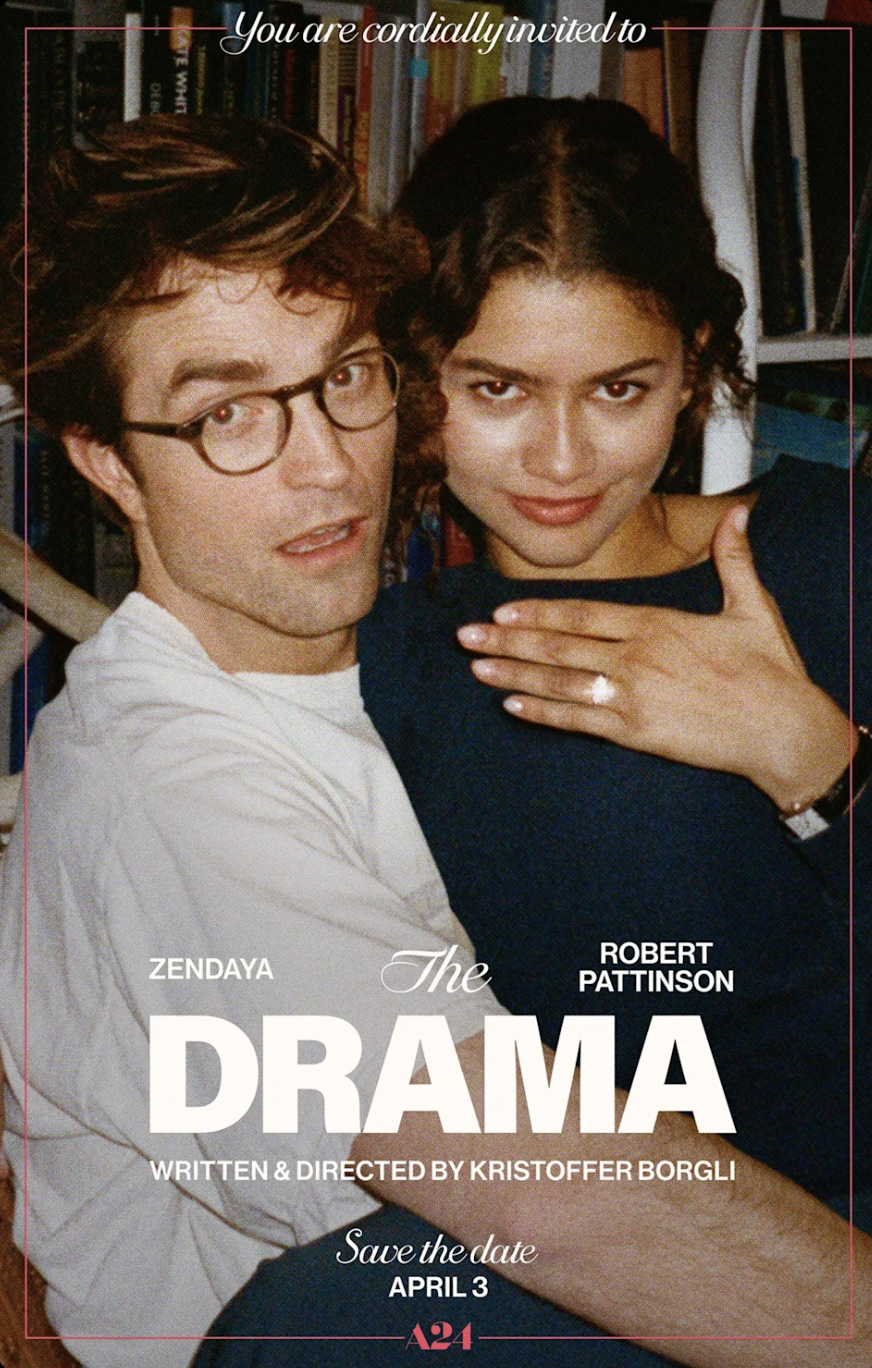
Surrounding the film’s release, gun safety organizations, Columbine parents, and Parkland survivors weighed in, and suddenly a Zendaya rom-com was a national conversation about whether Hollywood was trivializing the unsurvivable. Tom Mauser, whose son was killed at Columbine, told TMZ he found it “awful” that a would-be school shooting had been chosen as the twist to destabilize a romantic relationship. March for Our Lives, the organization founded by Marjory Stoneman Douglas survivors, posted that “with a subject this serious, the conversation cannot begin and end on screen.” Within weeks of The Drama stirring up a national argument about how Hollywood portrays school shootings, The Fallout was back at the top of the charts.
This is, of course, speculation. But we are watching the first generation raised entirely inside the school shooting era reaching an age where they can begin to process what that formation did to them. They practiced lockdown drills before they learned long division. A 2021 study published in Nature, analyzing 54 million social media posts across 114 schools in 33 states, found that anxiety, stress, and depression increased by 39 to 42 percent following active shooter drills. The National Academies of Sciences published a landmark report in October 2025 on the cumulative mental health effects of this drill culture. The APA has found that 75% of Gen Z cite mass shootings as a significant source of stress, and 56% of students say they experience stress when simply thinking about the possibility of a shooting at their school. And yet this research is almost entirely absent from the political discourse about gun violence. And Hollywood has, for the most part, continued to glorify gun violence more than ever before.
Consider John Wick, perhaps the most successful new action movie franchise of the decade, with three sequels and a spin-off currently also on HBO Max. Keanu Reeves moves through its incessant action sequences like a dancer, the deaths are consequence-free, and no one is haunted by what they've done, although the killing spree was technically motivated by grief over a death, just not a human one.
From 2000 to 2021, the rate of gun violence in the top 30 popular American films increased by approximately 200%, according to a 2025 study from the Annenberg Public Policy Center at the University of Pennsylvania. The researchers noted the parallel with rising firearm homicide rates among young people and raised questions about imitative effects. What the data suggests, at minimum, is that mainstream cinema has spent two decades further normalizing the gun as a neutral plot device with no more moral weight than a telephone or a car. The same generation absorbing lockdown drills at school has been absorbing John Wick at home. The cognitive dissonance of those two experiences — gun as existential threat, gun as cool aesthetic object — may be why a different kind of film feels so necessary: one that is less interested in how thrilling it is to fire a weapon than in what it costs to live in a country where everyone has one.
The Columbine shooting happened in 1999 while I was still in high school, and some of the films I saw in the early 2000s offer both a useful baseline, and a measure of how much has changed.
Michael Moore’s Bowling for Columbine (2002) was highly influential in my decision to pursue documentary filmmaking. Direct, polemical, and furious, it was a film that named names, confronted Charlton Heston on his doorstep, and demanded that America reckon with what it had built. It won the Oscar for Best Documentary and became at the time the highest-grossing documentary in history.
Gus Van Sant’s Elephant (2003), which won the Palme d’Or at Cannes, took a tonally opposite approach but was responding to the same imperative. Where Moore confronted with passion and sometimes even humor, Van Sant observed, cold and calculating. Long, drifting tracking shots through school corridors, non-professional actors improvising ordinary moments, a chronology fractured and repeated from multiple perspectives. And crucially, Van Sant depicted the violence itself, in what Roger Ebert described as “implacable, poker-faced, flat, uninflected” terms. There is no catharsis, no climax, no pumped-up style. Just the event, rendered in its full senseless duration.
Both films were made by adults processing a rupture, trying to understand how it occurred. The question each asked, in its different register, was: how did we get here?
The current cycle has stopped asking that question, as the answer has been so plainly revealed, yet so brazenly ignored. The films of 2024–2026 are not interested in the event itself. Most of them keep it entirely off screen, or displace it into genre and metaphor. The Fallout makes this choice explicitly: the shooting happens in the first six minutes, heard but never seen through a locked bathroom stall door, and the film then spends its remaining ninety minutes entirely in the aftermath.
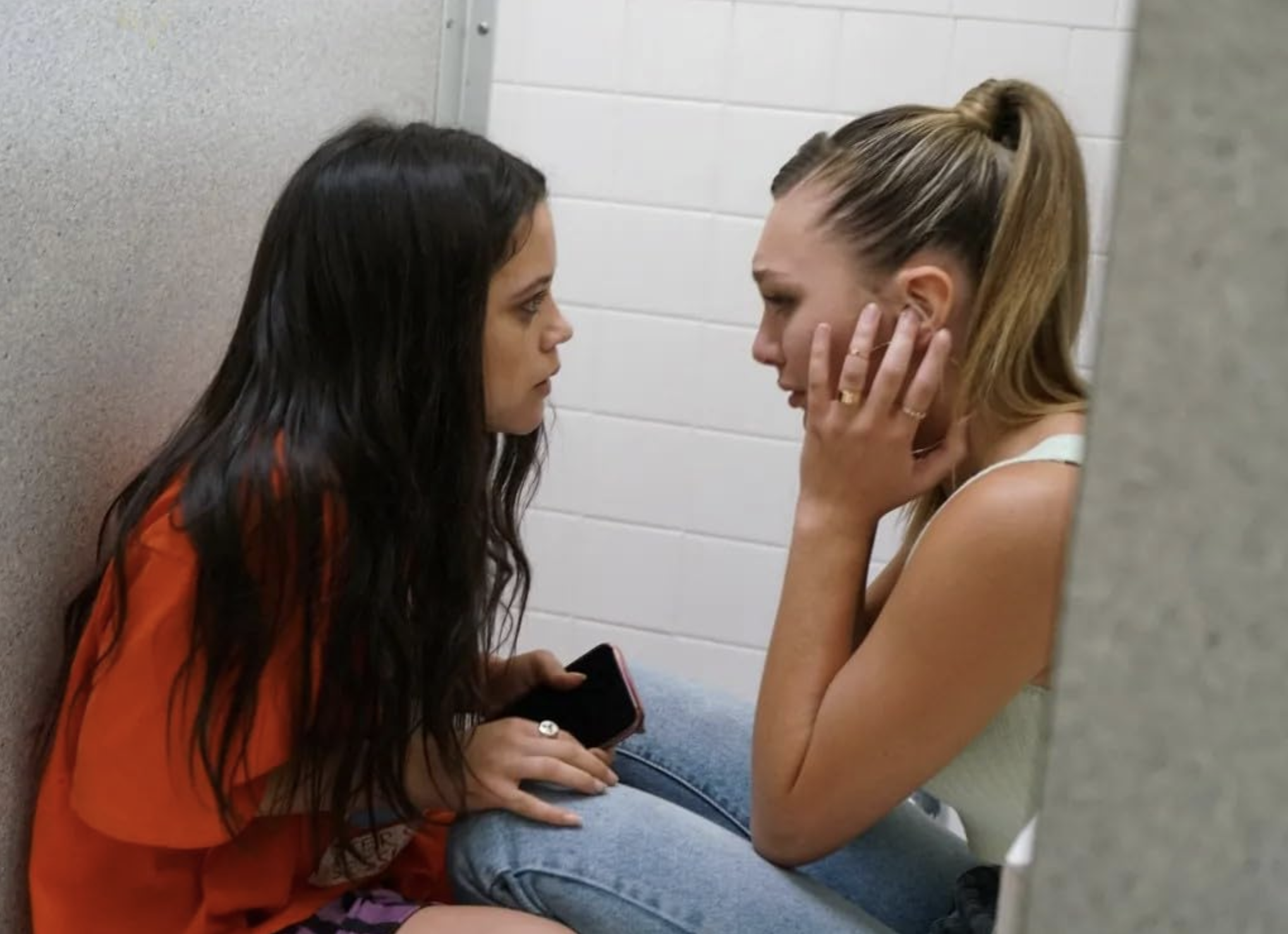
The Fallout (2021)
The arc is telling. Moore showed you the killers. Van Sant showed you the killing. The current generation of filmmakers has moved entirely into the space of what comes after: what it costs, what it leaves behind, what it does to the bodies and psyches of the living. The oldest members of Gen Z were toddlers when Columbine happened. They have no memory of a “before”. What they need cinema to address is not the origin of the crisis but the texture of living inside it, as a condition of ordinary life.
To that effect, 2025 brought us not one, but two major documentaries about school shootings. All the Empty Rooms (Netflix) began as a CBS News project: photographer Lou Bopp had spent seven years traveling the country to document the empty bedrooms of children killed in school shootings. Writing about the film, director Joshua Seftel explained his intent: “The reporting on school shootings tends to focus on headlines and statistics, and I think that can make us numb. We don’t usually get to know the people who were affected by these acts of violence.” The silence in those rooms carries more argumentative weight than any talking head could. Thoughts and Prayers (HBO), by Zackary Canepari and Jessica Dimmock, takes a stranger and more uncomfortable angle. It does not look at the dead, it looks at the industry the dead have generated: the $3 billion market for active shooter preparedness products, the school safety conferences with their vendor halls and pool parties, the former Green Berets training elementary school children in disarming a gunman. In conversation with PBS NewsHour, Dimmock described her intent: “We wanted this to be visceral. We wanted people to really live in these experiences.” And Canepari told Rolling Stone: “This is the reality. Our definition of safety has shifted, and these are now the terms which America has decided to live inside of.”
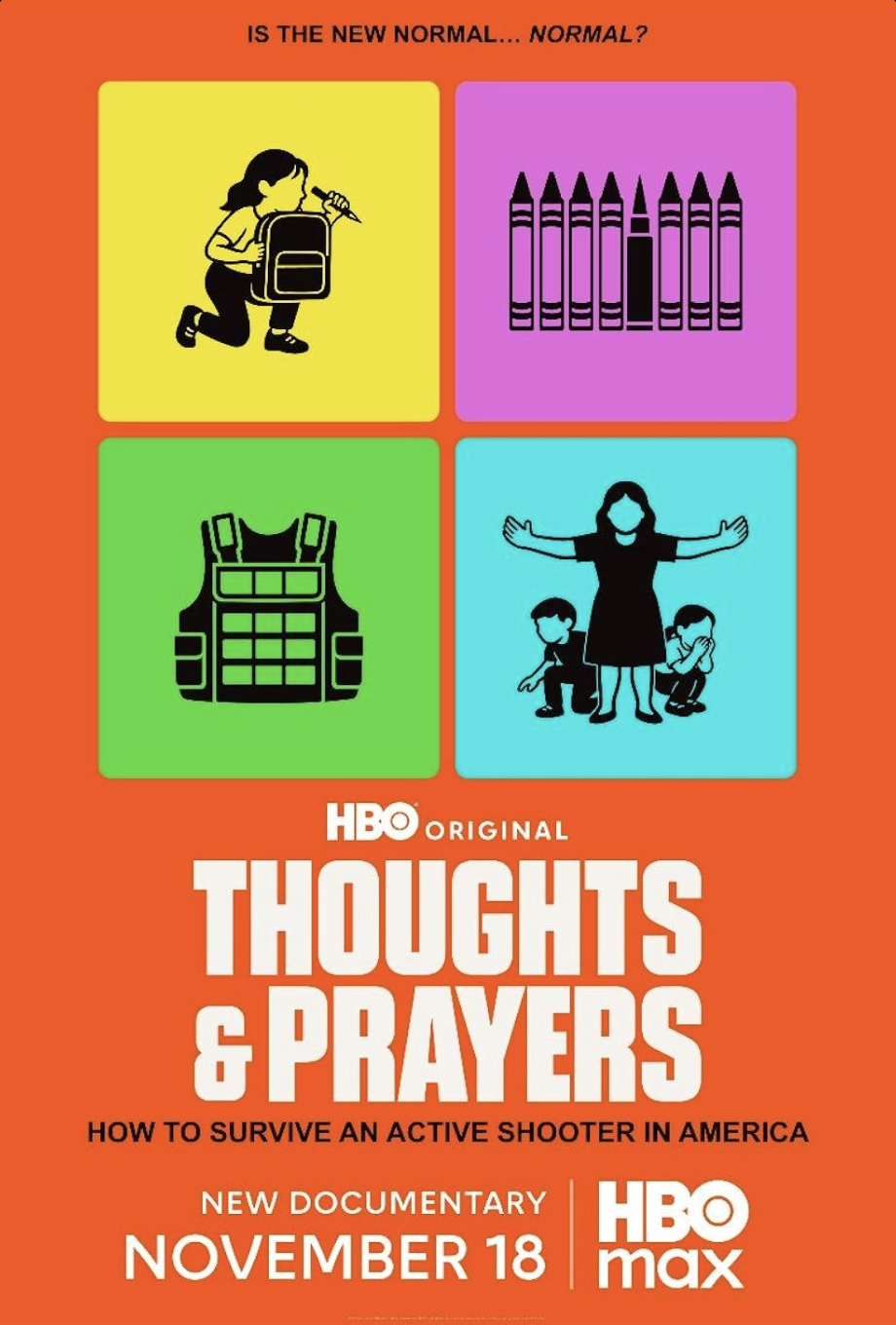
Both films share a crucial structural choice: they keep the violence itself off screen. There is nothing to desensitize you to, no image to metabolize and move past. Only the aftermath, stretching out indefinitely. A 2025 paper in the International Journal of Communication found that Gen Z processes school shootings as “generational trauma,” using “stylized performance and genre conventions” (dark humor, memes, irony) rather than depicting trauma directly, “to process fear, frustration, and critique.” These documentaries are the non-ironic version of the same impulse: the need to sit with the thing, to refuse the numbness that statistics and distance create.
This is also the logic of The Fallout, though it operates in fiction rather than documentary. Ortega’s Vada is not a heroine of resilience. She self-medicates. She distances herself from everyone who knew her before. She bonds with the wrong person for the right reasons. At one point she says, with the flat precision of real grief: “I had no idea one guy with a gun could fuck up my life so hard in six minutes.” It is the most clarifying line in any of these films. Not a policy argument. Not a moral. Just the math of catastrophe. Screen Daily’s Tim Grierson called the film “a sensitively argued case that young people should never have to face such horrific circumstances. But, given enough time, they can prove stronger than their concerned parents imagine.”
The research gives Vada’s experience statistical weight. The Nature study on lockdown drills found that even the drills themselves, absent any actual shooting, increase anxiety and depression by nearly 40 percent. What The Fallout depicts is what happens when the drill becomes real, when the thing the drills were preparing for actually occurs. And it depicts something the research also confirms: that those effects do not diminish with time, they compound. The film’s refusal to provide a neat arc of recovery, as it turns out, is documentary accuracy.
Mass (2021), Fran Kranz’s austere chamber drama, operates at the other end of the same wound. Four parents meet in a church. Two whose son was killed in a school shooting, two whose son was the shooter. They attempt to do the impossible work of sitting across from each other. The camera almost never leaves. Kranz trusts that the four actors and the four chairs and the four cups of bad coffee are enough, and he is right. Mass is the most severe film in this group, and also, in some ways, the most hopeful: it believes that acknowledgment is possible, even if forgiveness is not.
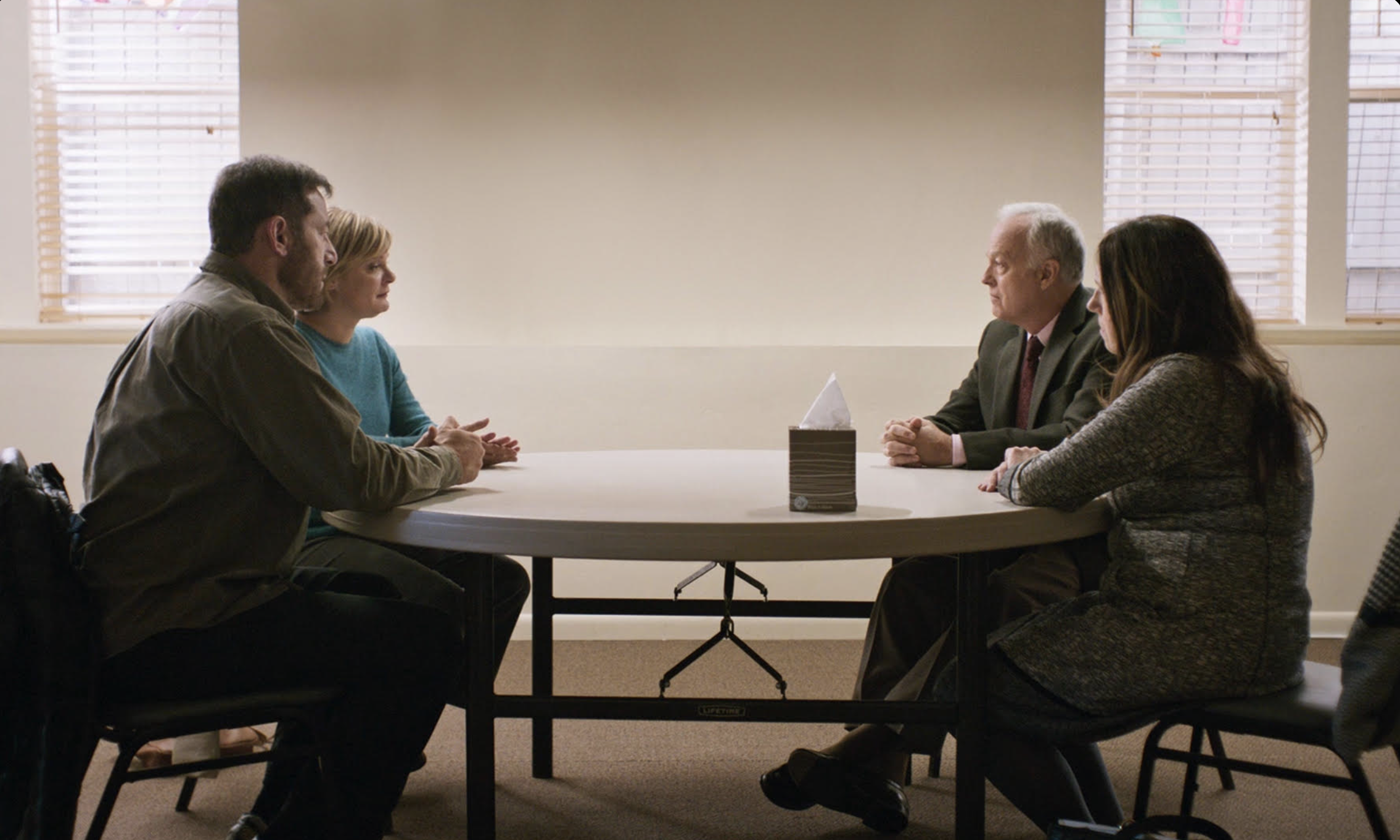
Mass (2021)
Two of the most contested films in this cycle, Ari Aster’s Eddington and Alex Garland’s Civil War, share a fundamental provocation: they refuse to treat gun violence as a discrete problem with identifiable causes and possible solutions. In both films, the gun is the logical and catastrophic conclusion of everything else that has already gone wrong.
Eddington (2025) is a neo-Western set in a small New Mexico town during the first weeks of COVID lockdown and the days following George Floyd’s murder. Joaquin Phoenix plays a sheriff who decides to run for mayor against the incumbent (Pedro Pascal), and the campaign becomes a vehicle for every fracture in American life: disinformation, conspiracy, racial reckoning performed and then abandoned, the displacement of real powerlessness onto imaginary enemies. Aster articulated his diagnosis in an interview with Deadline: people have been “taken away from having any access to changing the world” by big capital and big tech, their anger redirected at their neighbors because the actual engines of their suffering are unreachable. “Control over data and information is the privilege of power,” he said, “and that works even better if your suspicions and your anger can be displaced onto your neighbor.”
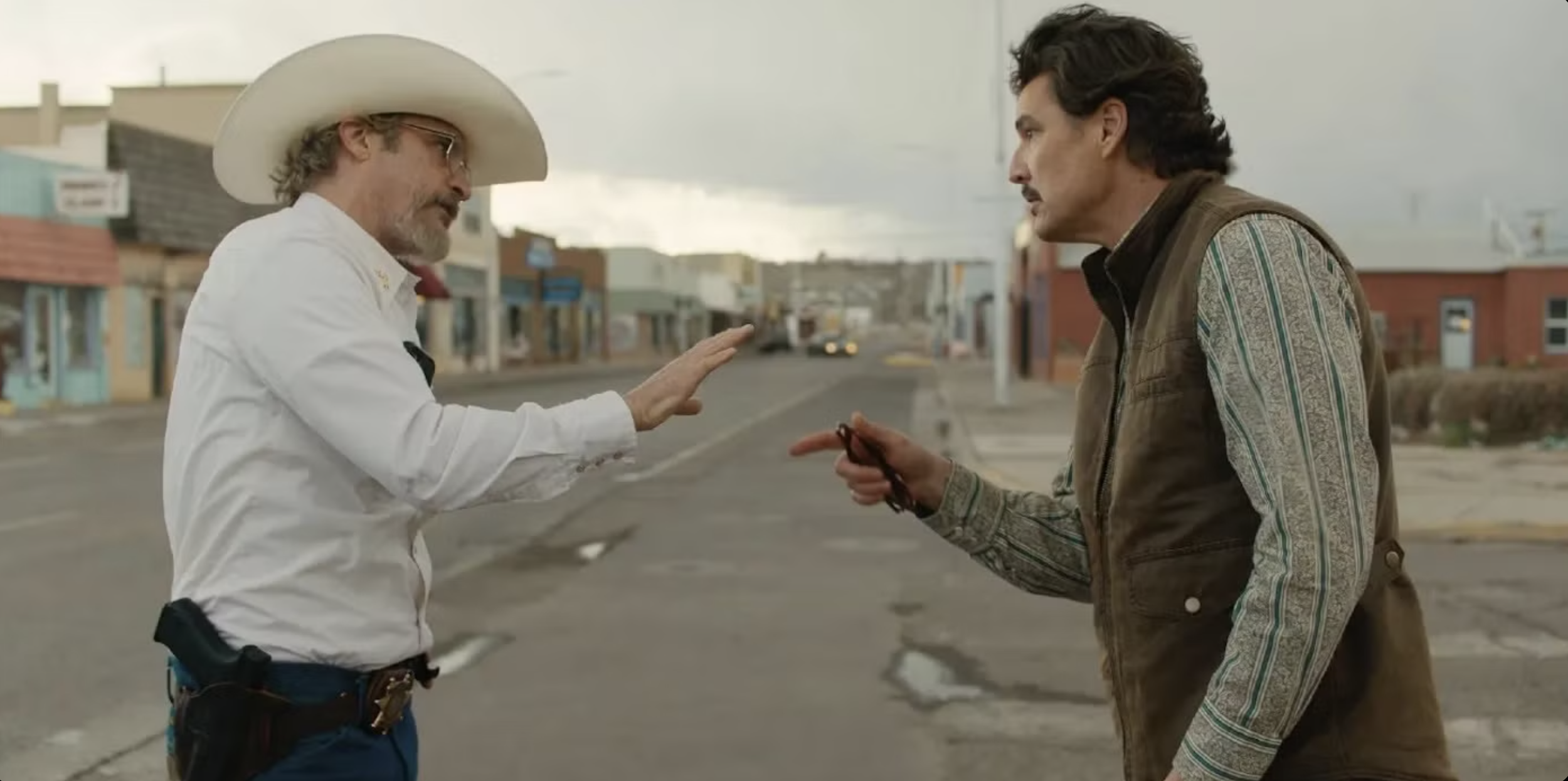
Eddington (2025)
The film divided critics sharply. NPR called it “a cynical simulacrum,” a reproduction of 2020’s chaos without genuine penetration. Owen Gleiberman in Variety praised it as “a brazenly provocative Western thriller,” calling Phoenix’s performance “among his most layered” (which I agreed with). MoMA described it as “a Venn diagram of family dysfunction, paranoia, and the collapse of what keeps a democratic society from devolving into barbarism.” John Waters named it the best film of 2025. In one of its most striking moments during the climax, Phoenix is being pursued by Antifa fighters, and then retreats into a building that turns out to be just your average rural American gun shop. You can image what happens next.
Civil War (2024) operates at a larger scale but with a similar philosophical stance. Garland’s near-future America has ruptured into warring factions, and the film follows a team of war journalists driving from New York to Washington to interview the president before rebel forces reach the capital. Sight & Sound described the film’s central move precisely: it “promises the spectacle of apocalyptic violence, provides it in horrific excess, then asks why we looked.” The most terrifying scene is not a battle but a roadside encounter. Jesse Plemons in red-tinted sunglasses, asks each journalist in turn: “What kind of American are you?” The question is not rhetorical. He is deciding who lives.
Both films were accused of the same failure: moral equivocation, the “both sides” critique. The refusal to assign blame, however, may not be cowardice but diagnosis: a society so thoroughly captured by misinformation and polarization that the question of who started it is less urgent than the fact of where it ends. What the research confirms is that young people already understand this. A 2022 survey found that Millennials and Gen Z are significantly more likely than older generations to attribute the cause of shootings to systemic factors (mental health, bullying, institutional failure) rather than individual evil. They have grown up inside the system that produced the violence. They do not need it explained to them.
Perhaps the most surprising entries in this cycle are the ones that approach gun violence through the supernatural, through the grammar of horror rather than drama. Hokum (2026) stars Adam Scott as a novelist who retreats to a remote Irish inn to scatter his parents’ ashes and becomes entangled with tales of a witch haunting the honeymoon suite. The supernatural machinery is genuinely unsettling, but the horror of the inn is the horror of an event involving childhood violence, externalized into folklore and ghost story because some wounds have no other container. It’s a film about what it means to spend a lifetime carrying something unspeakable.
More than 140 children and teens die by unintentional shootings every year in the United States, according to CDC data cited by Everytown for Gun Safety. These deaths are different in register from mass shootings, the result not of intention but of access and negligence. Yet they are almost entirely absent from our cultural conversation about gun violence, and nearly invisible in cinema. Hokum is one of the very few films to treat this specific grief, and it does so by refusing to treat it directly at all. You have to find your way to the film’s actual subject through the fog of its genre pleasures.
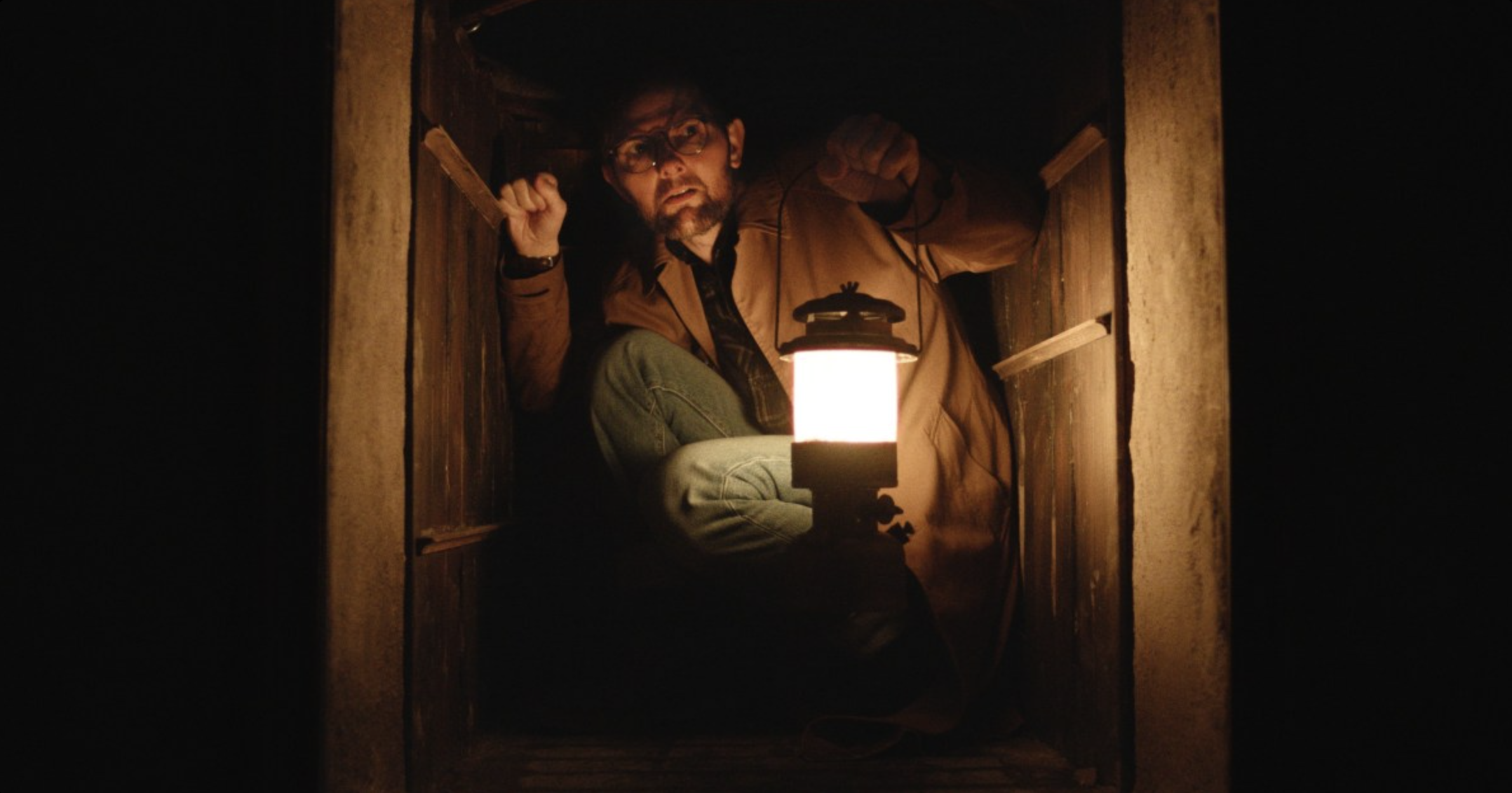
Hokum (2026)
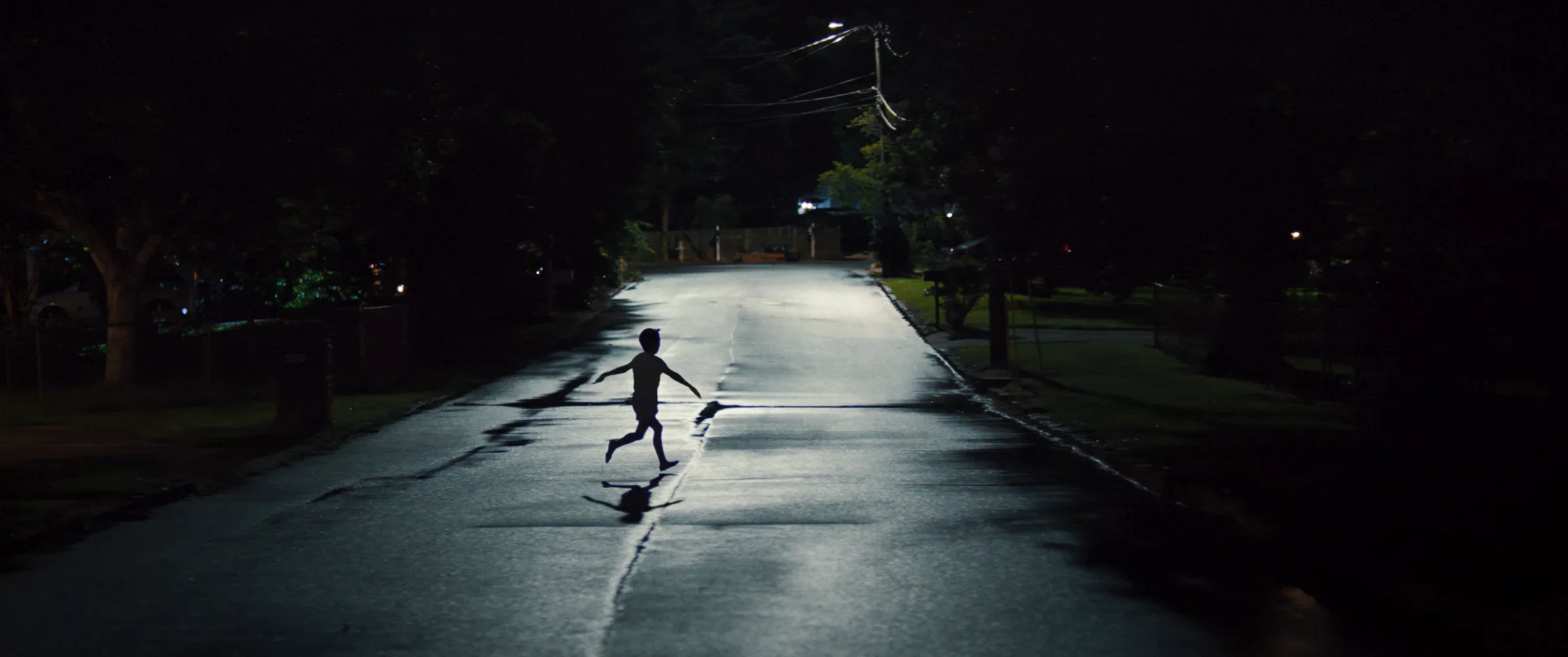
Weapons (2025) takes a different oblique approach. Zach Cregger's film centers on the mysterious overnight disappearance of seventeen children from the same third-grade classroom in a Pennsylvania town. An opening sequence depicts, with masterful cinematography and editing, the children running into the night, arms extended diagonally in a pose now seared in my memory. The plot is a supernatural mystery, and perhaps only supernatural horror could have adequately held what it is trying to say. Seventeen lives vanishing from a community overnight is an event that exceeds what realism can metabolize; it belongs, by its very nature, to the register of the surreal and uncanny. Like The Fallout, there is no lead-up to the tragedy: within the first few minutes of the film, the children are gone. What we are left with is the desperate attempt to find a culprit, the classroom teacher being the first to carry the burden of guilt. If the symbols aren’t clear enough, the film's visual and thematic language returns repeatedly to mass shootings: an AR-15 drifts surreally through a character's nightmare, floating in the open sky, disconnected from any hand or intention, present as ambient dread. Cregger is working in the tradition of horror as social X-ray, and what his X-ray reveals is a country that has so thoroughly normalized a certain kind of violence that it has passed from the realm of the political into the realm of the mythological.
Weapons (2025)
And then there are the films that use the gun to create discomfort as a deliberate aesthetic strategy rather than an unfortunate side effect. The Drama packages a story about a woman who nearly committed a mass shooting inside the genre conventions of a romantic comedy. Mia Tretta, a gun violence survivor and adviser for Everytown for Gun Safety, said in a statement: “Hollywood is treating school shootings like ‘edgy twists’ to drive ticket sales, but for me, this isn’t a plot point.” Parkland survivor Jackie Corin told The Hollywood Reporter: “Gun violence, particularly in schools, is not just another dramatic device. Art has the capacity to deepen public understanding and create emotional clarity, but it can also flatten and distort reality.”
Yet, the film’s defenders make arguments about the distinction between ideation and action: Emma planned a shooting and did not go through with it, and the film forces the audience to sit with the discomfort of deciding whether that distinction matters. As one reviewer noted, the confessional game that drives the plot “forces one to weigh the variables in the answers”: the other characters confess to things they actually did. Emma’s confession is the only one about something she thought about, but didn’t do. The film is, in this reading, a meditation on the moral weight of intention, and on whether a person can be held responsible for the violence they imagined but refused. The Prague Reporter argued that Borgli “repeatedly circles the idea that empathy itself is unevenly distributed — those most quick to judge are often least capable of it.”
My main critique of The Drama, at first, was that I found it unconvincing that Charlie would become so paranoid about his fiancé being potentially violent, when the events were so obviously in her distant past, with little residue of violence in her demeanor. But several reviewers also noted the structural significance of Charlie being English (not to mention the director being Norwegian). The film uses both as outsider lenses on an American pathology, with Charlie genuinely unable to understand how Emma’s psychology was possible. Are Americans so desensitized to this reality that it becomes somewhat understandable for a high schooler to be driven by bullying to bring her father’s rifle to school? And why is that action so plausibly frictionless in the first place? InsideHook called it “a missed opportunity to address some big questions about what motivates a child to fantasize about committing such a horrible crime and whether or not it’s fair to have empathy about the many factors that contribute to these tragedies.” But one little clue in the film may be a useful counterpoint to this perspective. Before Emma makes her confession, Charlie had confessed to actually cyberbullying a kid in his school. As Emma was a victim of cyberbullying herself, perhaps Charlie’s subconscious guilt about his own actions is the actual reason for his undoing.
One Battle After Another, Paul Thomas Anderson’s sprawling, six-Oscar-winning epic, including Best Picture at the 98th Academy Awards, is the film that perhaps speaks most directly to the generational argument at the heart of the issue. The film’s most famous image is also its most compressed thesis: Perfidia (Teyana Taylor), a Black revolutionary, firing an automatic weapon at a target range, her belly enormous with late pregnancy. The image is an almost unbearable juxtaposition. She is an instrument of both life and death.
The film then jumps fifteen years. The baby is now a young mixed-race woman, Willa (Chase Infinity), the film’s emotional center, on the run from forces set in motion before she was born. In one of the film’s most pointed visual callbacks, Willa is sent into a field by revolutionary sisters to practice shooting a machine gun. The gun passes between generations not as an inheritance but as a burden, the residue of choices made by parents who believed the violence they chose was justified, handed to a child who had no say in any of it.
Anderson, accepting his screenplay Oscar, was explicit about his intent: “I wrote this movie for my kids to say sorry for the housekeeping mess that we left in this world we’re handing off to them.” Backstage, he elaborated on Perfidia’s character: “What happens when your parents, who are damaged and have handed quite a difficult history to you — how do you manage that?” Willa’s answer, in the film, is to keep moving. She does not need her father to save her or her mother to emerge from hiding. She navigates the wreckage of her inheritance with a moral compass her parents couldn’t maintain. She is, as one reviewer put it, “the representative of us all. For we are all malignedly shaped by past politics, our traumatized parents, and wicked government-states that rule, ultimately, at gunpoint.”
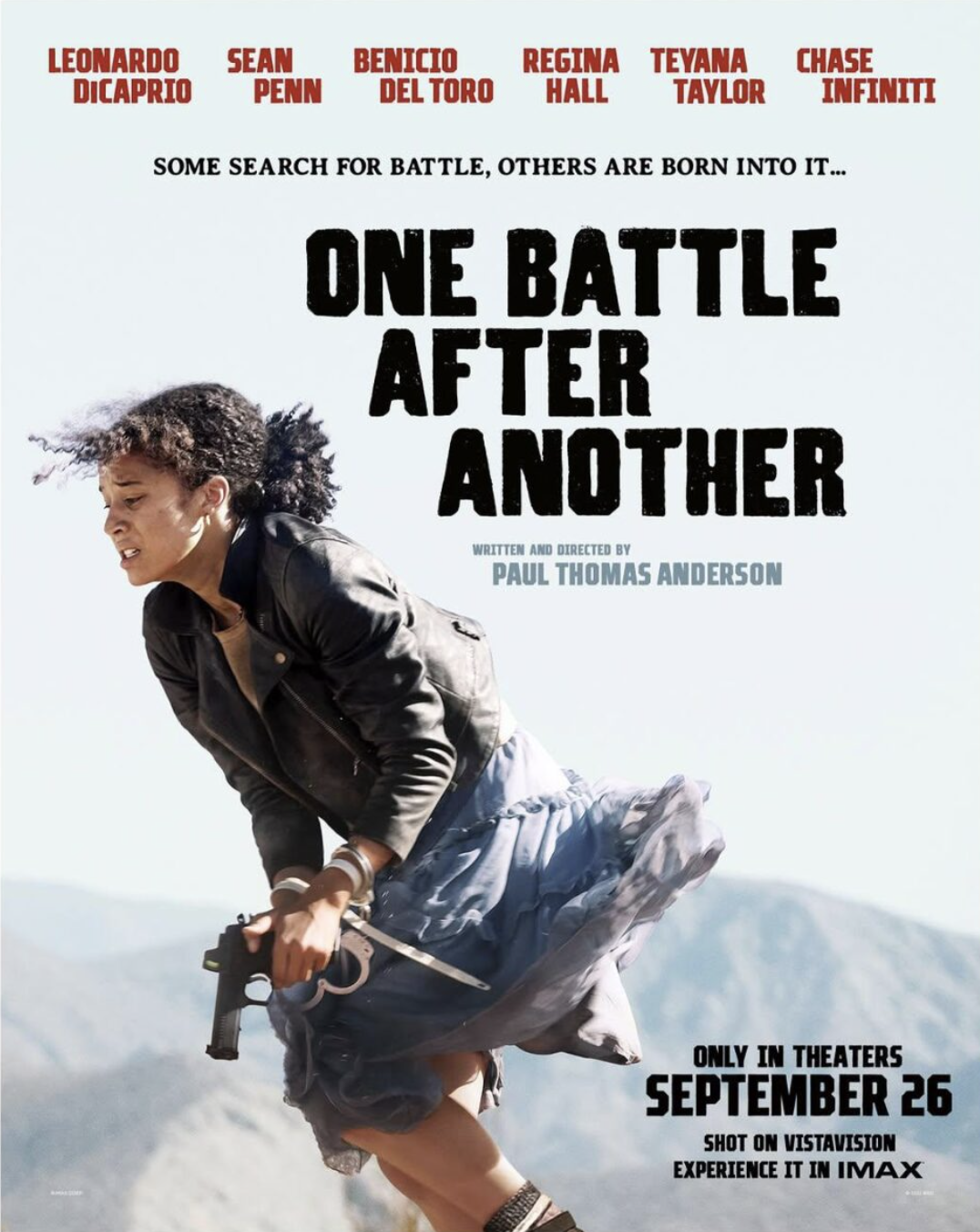
This is the most direct articulation in any of these films of what the research confirms: that gun violence is not merely an event but a transmission. It passes from generation to generation, reshaping psychology, behavior, and expectation. Project Unloaded’s 2024 Triggering report found that Gen Z’s relationship to guns is shaped not just by their own experiences but by the accumulated anxieties of everything they have grown up watching adults fail to resolve. Willa Beverly Hills, born into a revolution she didn’t choose and a war she didn’t start, is the most literal cinematic embodiment of that finding.
I started with a question: why is The Fallout number one on HBO in the spring of 2026? The answer may be less about any single film than about what happens when enough films circle the same subject simultaneously. When the documentaries and the horror films and the provocations and the chamber dramas all create, for the first time, something that feels like a reckoning. One can only hope that, when no other forces seem to provide enough impetus for change, maybe art and storytelling will.